Val Votrin
Speculative & literary fiction
London-based writer working across literary fiction, fantasy and horror.
About
Val Votrin
Born in Tashkent, in present-day Uzbekistan, and educated in Belgium, Val Votrin established his literary career writing in Russian. His books include The Last Magog (2009), a fantasy novel shortlisted for the Andrei Bely Prize, and The Speech Therapist (2012), a linguistic dystopia nominated for several major literary awards, including the Russian Booker Prize.
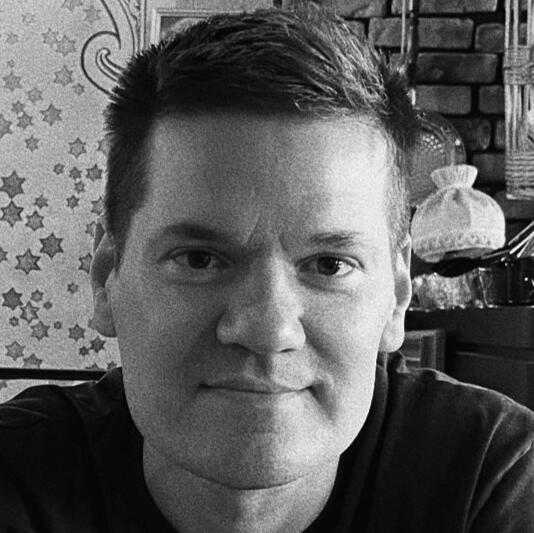
Since 2014, he has written fiction primarily in English. His short fiction has appeared in The Valancourt Book of World Horror Stories, Vol. 2, Quail Bell Magazine, Bewildering Stories and elsewhere. His first English-language collection, The Fear Register, is forthcoming from Valancourt Books in 2026.He is also a literary translator, with Russian translations of novels by William Gerhardie and Russell Hoban, and extensive translations of English-language poetry and short fiction, including work by Flann O'Brien, T. F. Powys, Gerard Manley Hopkins, A. E. Housman, James Thomson (including the first Russian verse translation of his long poem The City of Dreadful Night) and Eric Stenbock. He lives in London.
Books
Books
The Fear Register
Short fiction. Forthcoming from Valancourt Books, autumn 2026
A collection of eleven speculative stories moving between dystopia, horror, history, myth and the literary fantastic. Drawing on sources as disparate as medieval legend, European history and invented totalitarian worlds, the stories remake familiar cultural material into something stranger and darker, combining black humour and intellectual play with an abiding interest in fear, power and human freedom.
The Compiler of Bestiaries
Short fiction · St Petersburg, 2021 · in Russian.
A collection of ten speculative stories in which language, signs and systems acquire an unsettling autonomy of their own. Its worlds range from a hiccup cure that becomes an epidemic to "Lenin in Tyumen", mixing invented histories, strange journeys and intellectual play with darker questions about human agency.
The Plague Baker
Novel · Moscow, 2018 · in Russian (under the name Feodor Grot).
A historical phantasmagoria about a nineteenth-century German baker’s son with an extraordinary gift: he can see the spirits of disease and transform their grotesque manifestations into cakes. His pursuit of the Plague Maiden takes him from Germany through Persia to Russia, in a darkly comic collision of bacteriology, folklore and dream in which the boundary between illness and imagination steadily dissolves. The novel won the Novy Mir Prize for best prose in 2018.
The Speech Therapist
Novel · Moscow, 2012 · in Russian.
A linguistic dystopia set in a state where pronunciation, spelling and punctuation are matters of law, and a citizen’s command of correct language determines their place in society. Built around the absurd machinery of linguistic regulation, the novel turns language itself into an instrument of political power; it was longlisted for the Russian Prize, Big Book, Russian Booker and Alexander Pyatigorsky Prize.
The Last Magog
Novel · Moscow, 2009 · in Russian.
A novel set in an anti-historical, quasi-biblical world divided between the lands of Magog and Ogon, exploring chosenness and exile, memory and oblivion, belonging and otherness, East and West. Its invented mythology refracts contemporary ideas of nationalism, historical grievance and victorious war; the novel was shortlisted for the Andrei Bely Prize and longlisted for the Big Book Prize.
The Book of Prayers and Complaints
Short fiction · Moscow, 2007 · in Russian.
A collection comprising the novel "The Broken Comedy", two novellas and eleven short stories, moving between the grotesque, myth, fantasy and literary experimentation. Published in Nauka’s "Russian Gulliver" series, the book established many of the preoccupations that recur in Votrin’s later fiction: invented mythologies, unstable realities and the intrusion of the fantastic into systems of belief and everyday life.
Contact
Get in touch
For publication enquiries and other literary matters, please use the form below.
© 2026 Val Votrin